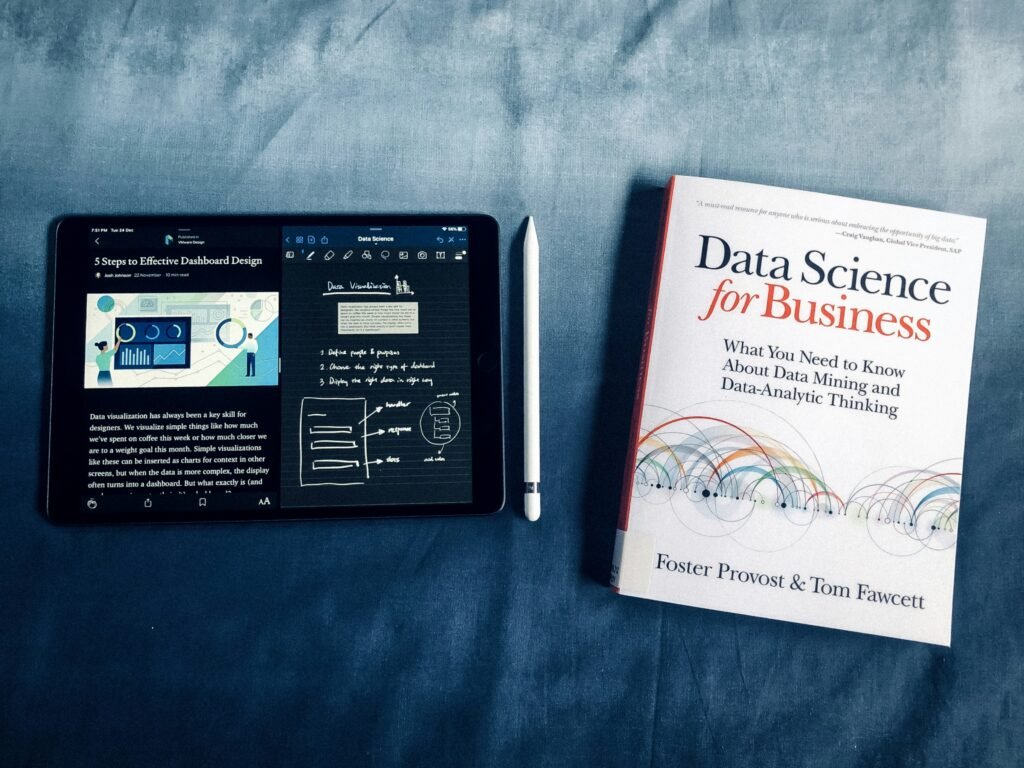
Introduction to Data Analytics in Business
Data analytics refers to the systematic computational analysis of data, which encompasses various methods and technologies aimed at deriving useful insights from raw data. In the business context, data analytics plays a fundamental role in facilitating informed decision-making and enhancing operational efficiency. By utilizing various analytical techniques, organizations can identify patterns, correlations, and trends that inform strategic actions.
The emergence of big data has drastically changed the landscape of business intelligence. Companies today generate vast amounts of data, necessitating sophisticated data analytics tools to convert this information into actionable insights. Data analytics encompasses several techniques, including statistical analysis, predictive modeling, and machine learning, all of which help organizations to better understand their operational environment.
One of the critical roles of data analytics is in decision-making. By analyzing historical data and current market conditions, businesses can assess potential risks and opportunities. This predictive aspect of data analytics enables companies to foresee market trends and adjust their strategies accordingly. For example, customer behavior analytics can reveal purchasing patterns, allowing businesses to tailor their marketing efforts to different consumer segments.
Furthermore, data analytics contributes significantly to understanding market dynamics and consumer behavior. By segmenting consumers based on demographic and psychographic factors, businesses can customize their offerings. This targeted approach not only increases customer satisfaction but also promotes brand loyalty, as consumers feel their unique needs are being addressed.
In conclusion, the significance of data analytics in business intelligence cannot be overstated. It serves as a vital component in guiding decision-making, tracking market trends, and enhancing customer engagement. As businesses continue to evolve in a fast-paced, data-driven environment, mastering data analytics techniques will be essential for sustained competitive advantage.
Understanding Business Intelligence
Business intelligence (BI) refers to the technological and procedural frameworks that gather, store, analyze, and provide access to data in order to support decision-making processes. By utilizing various tools and technologies, organizations can translate raw data into meaningful insights that enable them to understand performance metrics, identify trends, and assess situations with a high degree of accuracy.
One of the foundational components of business intelligence is data mining, which involves extracting valuable patterns and insights from large datasets. This process utilizes advanced analytical techniques to uncover relationships and trends that may not be immediately evident. Through data mining, companies can pinpoint customer behavior, market trends, and operational efficiencies, thus enabling them to make informed strategic decisions.
Benchmarking is another essential element of BI that involves comparing one’s business processes and performance metrics to industry bests or best practices from other companies. By understanding where their performance stands in relation to peers, businesses can identify areas for improvement and develop strategies to enhance efficiency and competitiveness. This process serves not just as a measurement but also as a guide for performance enhancement.
Performance metrics are vital in business intelligence as they provide quantifiable measures to evaluate the success of various strategies and operations. These metrics can take many forms, including financial ratios, operational performance indicators, and key performance indicators (KPIs). By regularly analyzing these metrics, organizations can track progress, uncover areas of concern, and leverage data-driven decision-making to refine their strategies.
The importance of business intelligence in today’s competitive landscape cannot be overstated. A well-implemented BI strategy allows organizations to not only improve their operational efficiency but also gain a significant competitive edge. By utilizing the insights gathered through data analytics, businesses can enhance their ability to adapt to market changes, respond to customer needs, and ultimately achieve their strategic objectives.
Key Data Analytics Techniques
In the realm of business intelligence, several data analytics techniques play pivotal roles in transforming raw data into actionable insights. Among these, the four primary types include descriptive, diagnostic, predictive, and prescriptive analytics, each serving unique purposes and utilizing various methodologies.
Descriptive analytics primarily focuses on summarizing historical data to provide a clear view of what has happened within a business. Techniques such as data aggregation and mining are employed to produce dashboards and reports that reveal overall performance metrics. For instance, a retail company may utilize descriptive analytics to analyze sales data, informing management about peak sales times and popular products.
Diagnostic analytics, on the other hand, delves deeper into historical data to understand why certain outcomes occurred. By employing statistical tools and techniques, businesses can identify trends and correlations. For example, an airline might analyze customer complaints to diagnose underlying issues affecting passenger satisfaction, leading to improvements in service quality.
Predictive analytics leverages statistical models and machine learning algorithms to forecast future outcomes based on historical data. It enables businesses to make informed predictions, such as a financial institution predicting loan defaults based on applicant data. This technique supports proactive decision-making by identifying potential risks and opportunities.
Lastly, prescriptive analytics recommends actions based on data analysis to achieve desired outcomes. This advanced form of analytics utilizes simulation and optimization algorithms to advise businesses on optimum resource allocation. An example of this is a supply chain management system recommending the best routes for deliveries based on current traffic data to minimize costs and timely deliveries.
In summary, these key techniques—descriptive, diagnostic, predictive, and prescriptive analytics—are essential tools in the modern data-driven business environment. By utilizing these techniques, organizations can enhance their decision-making processes and drive significant business value.
Data Visualization: An Essential Tool
Data visualization plays a pivotal role in business intelligence, serving as a crucial method for making sense of complex data sets. As organizations generate ever-increasing volumes of data, the need for effective data visualization becomes imperative. By translating numerical data into visual formats such as charts, graphs, and dashboards, businesses can glean insights more readily and facilitate informed decision-making.
One of the primary advantages of data visualization is its ability to simplify and illustrate intricate patterns that might otherwise remain obscured in raw datasets. Visual representations allow stakeholders, from analysts to executives, to quickly identify trends, anomalies, and relationships within the data. This ease of interpretation fosters effective communication within teams and ensures that everyone is aligned on key performance indicators and project objectives.
There are various types of visualizations, each serving distinct purposes. For instance, line charts are commonly used to represent time series data, while bar charts can effectively compare quantities across categories. Pie charts may illustrate proportions, while scatter plots are beneficial for showing correlations between variables. Additionally, dashboards combine multiple visualizations to provide a comprehensive overview, enabling users to analyze data from different perspectives simultaneously.
Furthermore, effective data visualization is not only about choosing the right type of chart; it also encompasses principles such as clarity, design, and storytelling. By employing best practices in color, labeling, and layout, businesses can enhance the impact of their visual data storytelling, ensuring that the insights derived are both accessible and actionable.
In summary, data visualization stands as an essential tool in the realm of business intelligence. Its potential to turn complex data sets into understandable visual formats facilitates deeper insights and empowers organizations to make data-driven decisions more efficiently.
Tools and Software for Data Analytics and Visualization
In the realm of data analytics and visualization, numerous tools and software options are available that cater to diverse business needs. Among the most prominent are Tableau, Microsoft Power BI, and R, each offering unique features and capabilities that enhance data analysis processes.
Tableau is widely acclaimed for its user-friendly interface and powerful visualization capabilities. It enables users to create interactive and shareable dashboards that display trends, changes, and patterns in real-time data. Tableau’s strengths lie in its extensive data connectivity options and robust analytics features, allowing businesses to extract insights from large datasets easily. Moreover, its ability to handle diverse data sources makes it a preferred choice for companies aiming to gain comprehensive visibility into their operations.
Microsoft Power BI is another popular choice, particularly for organizations already utilizing Microsoft products. This tool offers seamless integration with various Microsoft applications, allowing for efficient data manipulation and reporting. Power BI stands out due to its cost-effectiveness and range of features, including advanced analytics and AI capabilities that empower users to perform sophisticated analyses and visualize their findings effectively. Its dashboard and reporting functionalities are particularly tailored for business intelligence purposes, making it suitable for both novice and experienced users.
R, on the other hand, is a programming language and software designed for statistical computing and graphics. It is particularly advantageous for statisticians and data scientists looking for in-depth analysis. R offers a wide variety of statistical and data manipulation packages, providing flexibility and robustness critical for rigorous analytical tasks. By utilizing R, businesses can perform complex analyses and visualize data through power and customization that other tools might not easily replicate.
Integrating Data Analytics with Business Strategies
In today’s data-driven environment, the importance of integrating data analytics within business strategies cannot be overstated. Businesses can significantly enhance their decision-making processes by aligning data analytics with organizational objectives. This integration ensures that analytics is not merely an isolated function but rather a core component influencing strategic direction.
To achieve alignment, organizations should begin by identifying their key performance indicators (KPIs) that are directly linked to business goals. By establishing clear objectives, companies can focus their analytics efforts on relevant data sources, subsequently driving improved performance. For instance, a retail business may set targets around customer engagement, which can be closely monitored through analytics to understand purchasing behaviors. Through the systematic collection and analysis of data, businesses develop a deeper understanding of market trends and customer preferences.
One effective strategy for integrating analytics is through the implementation of a business intelligence framework. A structured approach can provide comprehensive insights, allowing organizations to adjust their strategies as new data emerges. Regularly measuring performance against established KPIs enables businesses to be agile, adapting their strategies based on data-driven insights rather than assumptions. For example, if sales data indicates a decline in a specific product category, a business can swiftly modify its inventory levels and marketing tactics to improve sales performance.
As competition intensifies, organizations that leverage data analytics effectively will find that they are better equipped to anticipate market changes and respond strategically. By fostering a culture that embraces data-informed decision-making, businesses can not only enhance their operational efficiency but also secure a competitive advantage in their respective industries. Ultimately, the successful integration of data analytics with business strategies leads to improved outcomes and sustained growth.
Challenges in Data Analytics and Visualization
Despite the numerous advantages that data analytics and visualization provide for enhancing business intelligence, organizations often face significant challenges when implementing these technologies. One of the primary obstacles is data quality. Businesses frequently contend with incomplete, inconsistent, or erroneous data, which can lead to misguided analysis and poor decision-making. To mitigate this issue, it is essential for organizations to invest in robust data governance practices that ensure data accuracy and reliability, including regular audits and validation processes that can enhance overall data quality.
Another considerable challenge is related to privacy concerns. With the increasing volume of data being collected, companies must prioritize the security of sensitive information. This is particularly crucial in industries that handle personal identifiable information (PII). Organizations should adopt comprehensive data protection policies and comply with regulations such as GDPR to safeguard user data and maintain consumer trust. By fostering a culture of transparency around data usage and protection, companies can alleviate concerns and promote a healthier relationship with data among stakeholders.
Furthermore, resistance to change poses a significant barrier to the successful adoption of data analytics and visualization techniques. Employees may be hesitant to shift from traditional methods to data-driven approaches due to fears of job displacement or the complexity of new technologies. To address this, organizations should invest in training and educational programs that empower employees to adapt to these changes. Creating a data-driven culture that emphasizes collaboration and continuous learning will facilitate smoother transitions and encourage buy-in from all levels of the organization.
Case Studies: Successful Implementation of Data Analytics
In the contemporary business landscape, the integration of data analytics and visualization techniques has proven to be a transformative strategy for organizations aiming to enhance their decision-making processes. This section delves into several case studies that exemplify how businesses have successfully implemented these practices, yielding substantial outcomes.
One notable case study is that of a leading retail company, which employed predictive analytics tools to forecast inventory needs based on historical sales patterns. By utilizing advanced analytics software, the company was able to optimize its inventory levels, reducing excess stock by 25% and minimizing stockouts during peak sales periods. This strategic implementation not only improved efficiency but also resulted in a significant increase in customer satisfaction and revenue.
Another exemplary case involves a healthcare organization that harnessed data visualization techniques to improve patient care management. By creating interactive dashboards that consolidated patient data, the hospital’s staff could easily track patient health trends and make informed, data-driven decisions in real-time. This initiative led to a 15% improvement in appointment adherence rates and enhanced overall patient outcomes, demonstrating the profound impact of visual data representation in critical sectors.
Moreover, a financial services firm adopted advanced data analytics to refine its customer segmentation strategies. By analyzing consumer data, the company identified distinct behavior patterns, allowing for personalized marketing approaches tailored to different customer segments. This resulted in a 30% increase in campaign effectiveness, showcasing the power of data-driven strategies in boosting marketing ROI.
These case studies illustrate the efficacy of data analytics and visualization in various industries, emphasizing the necessity for businesses to invest in such technologies to remain competitive. The lessons learned from these implementations underline the importance of aligning data strategies with organizational objectives to maximize data’s potential in driving success.
Future Trends in Data Analytics and Visualization
The landscape of data analytics and visualization is rapidly evolving, driven by advancements in technology and shifts in business needs. A significant trend is the increasing integration of artificial intelligence (AI) and machine learning (ML) into data analytics processes. These technologies are enabling organizations to automate data cleaning, transform large datasets into actionable insights, and predict future trends with a higher degree of accuracy. AI-driven analytics tools are becoming more user-friendly, allowing non-technical users to leverage sophisticated analytical techniques without a heavy reliance on data scientists.
Another important development is the rise of real-time analytics, which allows businesses to process and analyze data as it is created. This capability significantly enhances decision-making speed and accuracy, providing companies with a competitive edge in the fast-paced business environment. By incorporating real-time data feeds from various sources, businesses can continuously monitor performance and respond promptly to changing conditions, customer behaviors, and market dynamics.
Moreover, the visualization techniques are also advancing, with a clear shift towards immersive experiences through augmented reality (AR) and virtual reality (VR). These technologies provide stakeholders with spatial and intuitive ways to interact with data, facilitating deeper understanding and collaboration. Organizations are beginning to adopt these immersive visualization methods to communicate complex data stories to diverse audiences effectively.
To prepare for these future changes, businesses must adopt a proactive approach. This includes investing in training for staff on emerging technologies, prioritizing the integration of advanced analytics into decision-making processes, and fostering a culture of data-driven thinking. By doing so, organizations can not only adapt to these innovations but also thrive as they transform data into strategic assets.
